Offered as an Advanced Short-term Course (Level I & II)* in collaboration with St. Mira’s College for Girls, Pune (autonomous; affiliated with Pune University), in alignment with the National Education Policy (NEP).
*Previously offered as a PG Advanced Diploma, the depth, credits, hours, and curriculum remain unchanged.
Admissions Open for the 2026 - 2028 Cycle
About the Training
Presence Oriented Psychotherapy™ is a comprehensive, two-year advanced training for mental health professionals.
This training brings together mindfulness and presence-based contemplative practices with contemporary psychological approaches including:
- attachment theory,
- somatic psychology (including subtle energy awareness),
- parts work, and
- trauma resolution.
The therapeutic process is understood as an alive, moment-to-moment interplay - held gently, relationally, and with embodied attention to both mind and body.
As a unique approach, this training has been developed and sensitively designed by Sandy Dias Andrade, mindfulness- and presence-based psychotherapist and practitioner with over 25 years of experience. The program supports participants to have a direct inner experience of Mindfulness and Presence and apply this orientation to one-to-one and group therapeutic spaces. It can also be applied with any other modality.
Each module sets the base for a deepening into the principles of intention, attention, attunement, resonance and wholeness and bringing this alive in the therapeutic space.
Orientation of The Training
At its heart, this program is a training in orientation – an orientation to Presence or ‘beingness’ equipping therapists with the required skills/attitudes to allow for Presence in therapy..The orientation enables deeper healing forces to emerge in psychotherapeutic contact and facilitates the client’s movement towards a felt sense of wholeness.
The training explores experientially three vital ingredients of therapy that brings about transformation:
- The Therapist’s Presence: The quality of Embodied Presence of the therapist
- The Relational Space: The quality of Compassionate Attuned Presence in the therapeutic alliance
- The Client’s Self in Presence: The quality of inner listening that stimulates the Client’s Self in Presence.
ELIGIBILITY CRITERIA
- Academic background in Psychology/Social Work/Psychiatry at graduate/post-graduate level
- Practicing Counselors & therapists will be preferred
If you do not have the required background and yet feel aligned with the course orientation and are called to do the program, you are welcome to apply. Readiness and fit may be explored through a conversation (interview) as part of the admission process.
What the training entails
- Strong theoretical grounding - The therapist is equipped with background knowledge drawing from interpersonal neurobiology, neuroscience, attachment theory, somatic and energy psychology, trauma resolution principles and mindfulness-based cognitive behavioural work.
- Rooted in Buddhist Psychology - Key principles from Buddhist Psychology form the base that informs the work and relevant exposition to other wisdom traditions supports an understanding of an interdependent sense of Self.
- Training in formal mindfulness practices - that enable a natural flow of compassion and wisdom. It equips therapists to imbibe an attitude of openness, non-judgement, kindness, curiosity and `not knowing’. There is an exposition to key principles that marks mindfulness-based approaches in therapy. Therapists are also equipped to guide inquiry into mindfulness and hold individual and group mindfulness spaces.
- Emphasis on the inner work of the therapist - this serves as the ground on which therapeutic contact is established and deepened. Hence an ongoing mindfulness meditation practice, attending retreats and personal therapeutic processes is part of the course. Besides verbal contact, other modalities such as art and movement are also used to facilitate a non-conceptual intuitive knowing that guides the process of therapy.
- Skills to facilitate the client’s inherent wisdom, allowing it to emerge moment-to-moment within the therapeutic relationship.
- Integration into participants’ own fields of practice, encouraging application with the populations they work with.
- Second-year research component, where inquiry, methodology, and writing are aligned with principles of mindfulness and presence and apply a Presence Orientation to their areas of interest and expertise.
JUDY MOORE
Reviewer of the Curriculum

Former Director of Counselling & Director of the Centre for Counselling Studies, University of East Anglia, UK Author - Senses of Focusing
“I found this course very impressive indeed in its range and depth. This programme will clearly develop the ability of participants to work with clients from a place of deep ‘Presence’. It is well thought through in terms of its design and assessment and, from my knowledge in related fields in the UK, it is of similar standard. The content, however, goes way beyond what is found in most counselling/ psychotherapy programmes. It is wonderful that such a rich and inspirational programme should be on offer at this time. I congratulate Sandy Dias Andrade and her team for designing such a well thought-through, academically rigorous and utterly inspiring programme.”
Course Design and Curriculum:
The program is intentionally paced to allow integration between modules, supporting learning to unfold in both professional practice and daily life.
- Immersive 5 full-day modules, spaced approximately two months apart
- Monthly group supervision sessions between modules, supporting integration into practice
- One residential retreat each year, supporting deeper settling and embodiment
- Options to attend the program fully online or in a hybrid format (online + in-person modules* in Pune)
In-person modules are offered when a minimum of six participants confirm attendance.
Curriculum
Level 1 - Year 1 - 29 credits 675 hours
- Module 1- Mindfulness of the Therapist
- Presence Orientation Paradigm
- Intention & Attention
- Mindfulness
- Self Care
- Spacious Awareness of Thought, Feelings, Sensations
- Therapeutic Contact
- Module 2- Compassionate Presence
- Attachment Theory & Relational Space
- Interpersonal Neurobiology
- Self Compassion
- Attunement & Resonance
- Focusing Methodology
- Module 3- Retreat- I
- Shamata & Vipassana
- Practices of Brahmaviharas
- Movement & Art-based Practices
- Practices from Yoga
- Module 4- Self as Presence
- Neuroscience of Mindfulness
- Non-Self & Wholeness
- Spacious Awareness of Thought, Feelings, Sensations
- Principles of Internal Family Systems
- Methods of Inquiry into Parts and Self
Part II - Year 2 - 29 credits 675 hours
- Module 5- Trauma Resolution & Mindfulness
- Principles of Somatic Psychology
- Embodiment & Trauma
- Research in Mindfulness
- Methods of Inquiry
- Module 6- Subtle Body
- Developmental Stages in the formation of Self
- Subtle Body in Psychology
- Sensing, Feeling, Being
- Intuitive Awareness
- Module 7- Retreat - II
- Compassion Practices
- Open Awareness
- Subtle Body Awareness
- Movement & Art-based Practices
- Module 8 -
- Non-dual Wisdom in Psychotherapy
- Embodied Cognition
- Presence and belief structures
- Individual Research Project
Completion Requirements:
These requirements are designed to support continuity of practice, reflective integration, and ethical grounding, rather than assessment alone.
- Attendance of Modules:
- Modules are taught in an immersive and experiential way over 5 full days.
- Attending all days of the module is necessary for a collective contained learning experience.
- Each module also builds on the previous one, layering the embodiment of the learning and development of skills of perception and support.
- 480 hours of Mindfulness Practice
- Assignments:
- Short essays and documented client and peer sessions
- Conduct 60 peer sessions (30 in each year)
- Conduct 60 client sessions (30 in each year)
- Receive 20 personal counseling sessions (10 in each year)
- Receive 16 individual supervision sessions (eight in each year)
- Complete Individual Research project (in the second year)
At the end of year 1, participants are automatically enrolled for year 2.
Course Dates
Pre-course 40-day Mindfulness Practice (Integrating Compassion & Wisdom), starting June 27th, is a part of the program. It is included at no additional cost for all enrolled students.
Part I - Year 1
- Module 1- August 19-23, 2026 Online for everyone
- Module 2- November 9-13, 2026 Hybrid
- Module 3- January 27- February 2, 2027 Hybrid
- Module 4- March 17- 21, 2027 Hybrid
Part II - Year 2
- Module 5- June 23-27, 2027 Hybrid
- Module 6- September 22-26, 2027 Hybrid
- Module 7- November 15-21, 2027 Hybrid
- Module 8- February 16 - 20, 2028 Hybrid
- March-July 2028 - Research Project Completion and Final Submissions
Three-hour group supervision sessions once a month between modules to support application to practice.
PROGRAM FEE
- Year 1: Rs. 1,05,000/- (89,970 INR +18% GST*)
- Year 2: Rs. 1,05,000/- (89,970 INR +18% GST*)
Please Note: The stated program fee does not include the cost of the following:
- 8 individual supervisions per year - Individual supervision with an approved supervisor from the Just Being Center is currently charged at Rs. 2000/- per one-hour session (charges may be subject to slight revision over time).
- 10 personal counseling sessions per year - Participants may choose their own counselor, either external or from Just Being.
- Travel, accommodation, and meals for participants attending in-person modules at the Just Being Center in Pune.
Benefactor Contribution
Our program fee covers the essential costs of teaching, supervision, administration, and learning infrastructure. Participants who are able may choose to offer an optional benefactor contribution, supporting scholarships, inclusivity across contexts, and the long-term sustainability of our work.
Contribution is held in the spirit of interdependence and generosity, with deep respect for individual capacity and choice.
Suggested Benefactor Fee: ₹1,25,000 (inclusive of GST)
OR
Any additional contribution beyond the program fee of Rs. 1,05,000 (inclusive of GST)/- is deeply appreciated.
Financial Support
If this program resonates with you but financial constraints are a concern, please don’t hesitate to reach out to us— by email to justbeingcenter@gmail.com or WhatsApp +91 9011036828.
Invitation to Apply
Admissions are offered through a considered application process.
Applications are reviewed on a rolling basis until seats are filled.
Application Process
- Submission of Application form
- Short-listed Candidates will be invited for an Interview
- Interview
- Intimation of Final Selection
- Payment of a non-refundable deposit of Rs.25,000 to reserve a seat within 2 weeks of Selection.
-
Completion of formalities (Document submission & Full fee payment for Year 1 to confirm seat)
→ FAQs
A closing invitation
If you feel drawn but are still sensing your way, you are welcome to take your time.
When you are ready, we look forward to hearing from you.
Email: justbeingcenter@gmail.com
Phone: WhatsApp: +91 90110 36828
Shilpi Shabdita is your main point of contact and she coordinates this course at Just Being.
In the meantime, you can be a part of the Just Being community joining in for our free community offering of Saturday mindfulness practice circles, or other offerings from the center. → Register here!
Arpita Bohra

Psychotherapist
I had heard about Sandy’s therapeutic work and way of relating from friends who had worked with her in training and therapy. I had also been training and working for 5+years when I made the decision to step out of a psychoanalytic studies program and train with Sandy. My work required me to do shorter term intensive therapy with students at university who came with difficulties ranging from anxiety, early childhood trauma, attachment issues, chronic depression, and what the DSM terms as borderline personality disorder.
Doing the Presence Oriented Therapy course was one of the best decisions and investments I have made as a mental health professional. Learning under Sandy as brought a fundamental grounding, awareness and attunement to my work with clients. In our first module, Sandy addressed an elemental aspect of BEING a therapist - stability and grounding. What I really adored about this was that she viscerally addressed the need for a stable internal base for client work. The impact of psychic pain, unconscious conflicts and somatic suffering leave imprints that we have not been fully taught to be with in most of our MA/M.Phil programs. It was with Sandy that I learned how to ground myself through awareness and hold deeper space for my clients to access their own awareness and emotions. Training with Sandy helped forge an alive and ongoing connection with my therapist self and therapist “spirit” that I hope to deepen over the course of my life. Here are some core differences in my work after training.
1.) Deeper self awareness and the ability to listen to what my body is telling me/ somatic awareness in sessions and processes to work with what has been evoked on an emotional/ somatic level.
2.) A clear sense of how to bring a trauma informed approach on a spectrum- to working with clients, step by step. My work now is guided by helping clients locate their internal and external resources and anchors so that they can experience more agency and containment as we deepen our explorations of painful or stuck areas.
3.) The capacity to help clients build a connection with their observing ego/ awareness while we explore and navigate different emotions.
4.) The experience of the embodied person-centric approach. Honing my own capacity to slow down, invite the clients awareness into the moment and the body, and to remain unhurried and centered as we explore new terrain. The ability to BE more present with and validate more deeply my clients emotional conflicts and experiences in a way that give breathing space for them to be expressed and felt more deeply. I feel my instincts around what creates flow in therapy and what ruptures it have grown more refined.
5.) A focusing-oriented framework for gently working with somatic material in the body and emotions in the mind. Along with thoughts and emotions, I now work with clients to locate and speak from their “ felt sense” which leads to more meaningful and intimate work and is excellent in short term depth therapy.
6.) An extremely valuable framework for language and felt sense using the Internal Family Systems lens to look at conflicts within the psyche, and an understanding of the role of language in expressing and containing emotional material.
7.) A deeper experiential alignment with the wisdom of the eastern traditions in looking at the capacity of the mind to create patterns of suffering or distortion, integrated with the discoveries of trauma informed approaches of the west to healing trauma.
8.) An attachment theory informed perspective when looking at relational conflicts with clients.
Sandy has been one of the most important teachers in my life. If I have to sum it up in a sentence- my earlier academic training and reading theory taught me a great deal about what psychotherapy is, and what different schools of thought and therapists have brought to the table. My training with Sandy has taught me much more about what BEING a therapist is, and cultivating my own capacities to be a more grounded, attuned, unhurried and curious person. Sandy’s approach helped me see how radical slowing down to listen can be, and that has helped me find a sense of flow and ease in my work with clients.
Batch 2018-20
Kumar Kunal Jha, PhD

Researcher & Writer
The POP program, for me, has been life changing and I would highly recommend it to anyone contemplating if they should embark on this challenging yet beautiful journey.
POP is mindfully curated and led by Sandy, who has been our lighthouse during this entire course. POP helps in building understanding of crucial frameworks such as Attachment theory, Internal Family Systems (IFS), Focusing, Buddhist philosophy, Somatic experiencing, non-dual wisdom not just at a concept level but as experiential learning. Further Sandy helped us understand what mindfulness and interdependence means in the true sense. Thus enabling us to bring everything that we have learned together while integrating it in the safe space we hold with a deepened understanding of the therapist’s presence, relational field and the client’s state of presence.
On a personal level, I could witness the program’s impact way beyond what I could have ever imagined. Post pandemic, a lot of organisations were laying off employees and initially my intention for joining the program was to have some sense of safety and skill set that would make me more financially independent. Navigating through this program, I understood myself better and it was because of the safe spaces and support that POP provided that I realised what I truly love and the way I wanted to live my life. I realised that my dreams and aspirations should be driven by curiosity instead of fear. This was possible only because I was able to be present and be in presence (with myself and the world). Over time, with regular formal practice, the quality of presence that I was experiencing also changed as I was able to compassionately witness aspects of attunement and resonance even with the parts within me that I used to think were unpleasant. Now I feel more grounded and centred, as I invite all these parts, even those that I considered unpleasant, to meet me as they want to.
Words cannot do justice for what I feel and sense in my body as I think of the impact that POP has had in my life. Growing up, I have always questioned what it really means to be at ‘home’. What feels to be seen, heard and held? For the first time, I understood that ‘home’ has been within me and that I could always return to it whenever I wanted to.
Batch 2022-24
Avantika Malhautra

Psychologist offering Psychotherapy and Expressive Arts therapy
The PG Advanced Diploma in Presence-Oriented Psychotherapy has been curated with careful clinical judgment of the knowledge, skills and practice that a therapist requires to effectively and effortlessly facilitate change for their clients. The flow of the course is beautiful and each module picks up from the last and adds to the continuity of learning. I love how holistic the course is in bringing in various perspectives of psychotherapy, psychology and philosophy together. There is as much, if not more, focus, on the Person and Self of the therapist as there is on the tools and techniques for therapy and the therapeutic relationship. Sandy’s gentle, compassionate presence and vast professional experience makes this course very unique and depth-oriented. I have thoroughly enjoyed the introduction of guest international faculty and integration of art and movement practices into the process of self-awareness. This course has been way beyond my expectations and has really helped me move towards authenticity, ease and an expanded awareness personally and deepened my theoretical grounding and therapeutic processing skills, professionally. I am really grateful for this opportunity.
Batch 2017-19
Lata Narayan

Retd. Professor, Tata Institute of Social Sciences
Being with Just Being!
I look back at the past year with a sense of awe at the range of learning processes that I have experienced. Though the body-mind connection was familiar to me, and I practice Vipassana and hence am familiar with body sensations, the processes in the course opened up new meanings of the term body-mind connection. The presence oriented approach is not touched upon in any other counseling course, and I now feel that it is so integral to the counseling process. The course has helped me in my approach to professional assignments, these much more enriching. The methodology of the course was also very creative, with an emphasis on student and facilitator co-creating the learning space .Sandy was a role model in every sense of the word- practicing ‘presence’, using participatory processes, and just being herself.
When I joined the course, I had decided that I would not do the assignments. But by the end of the year, I had done most of the assignments as these were so enjoyable!
For me personally, it has been a year of certain life changes, and being part of the course has helped me in this process. There have been several changes which are difficult to write about, but suffice to say, that experiencing the presence processes has facilitated my personal transformation also. I have ever grateful to the universe for giving me this opportunity to do the course, at this phase of my life.
Batch 2017-19
Aditi Boratkar

RCI certified Clinical Psychologist
I felt a need to learn how to use mindfulness and presence in psychotherapy because I realised during my training as a RCI certified clinical psychologist that no psychotherapeutic modality or psychological counselling would be effective unless a person is able to be present to what was being said and what was happening inside the therapy/counselling room. During the presence oriented psychotherapy course I learnt from Sandy how to view presence as a capacity and developed the skills to facilitate capacity building for presence using mindfulness practices for myself and people who seek my consultation. This course was an immersive meditative experience of self-care, skill-building, supervision, contemplation and research. Sandy is a kind and generous teacher and truly a gem of a person. I highly recommend mental health professionals who are seeking skill building/continuing skill development to take up this course!
Batch 2020-22
Aimy Choudhary

Expressive Arts and Movement Therapy Practitioner
This course has been a transformative journey for me. Being in ‘Presence’ and experiencing the qualities of ‘Presence’ has helped me to develop grounded awareness: A place I can come back to again and again. Sandy’s gentle guidance and embodied presence created a safe space where I could truly connect with myself and others.
Through peer sessions, demos and observations we spent ample time integrating mindfulness and presence into our daily lives, making it a truly embodied experience. This has equipped me to be a more supportive and understanding friend, colleague, and therapist. Through various modalities like IFS, polyvagal theory, focusing and somatic work, I was able to touch and befriend the parts of myself I never knew existed. It’s not just a course, it’s a lifelong experience that stays with you. It’s a must-do for anyone seeking to deepen their self-understanding, cultivate presence, and hold space for others with compassion and authenticity.
Thank you, Sandy, for this profound journey of growth!
Batch 2021-23
Snehal Saraf

Psychotherapist and Founder of Sneh Therapy
POP has been life altering personally and professionally. I believe we can only meet the clients as deeply as we have met ourselves. And POP became the medium which sharpened the most important tool in therapy- the self of the therapist! It is beyond just a therapeutic approach - it unravels deeper aspects of self in an experiential, non prescriptive, embodied and process oriented manner at physical, emotional, mental, spiritual/subtle body level. Hence, perfectly blending energetic, biological and behavioural sciences.
I could finally slow down, tune in and sense into my being and breath. The essence of this course is enriching the quality of our presence without which no technique or modality will be effective. So far I have collected a lot of knowledge on how to be trauma-informed but this is the only course which could help implement the depth and connect needed with self and client in order to facilitate a trauma informed therapeutic work. Forever grateful to this course and Sandy!
Batch 2021-23
Ruchi Bhuwalka

Counselling Psychologist
My therapeutic journey began in 2016, initially focused on cognitive restructuring, helping clients identify and challenge unhelpful thought patterns. Since enrolling in the POP program at JBC, my approach has undergone a profound transformation. I now prioritize presence, pausing, and slowing down within the therapeutic space. This shift has allowed me to cultivate a deeper connection with clients by acknowledging and exploring their feelings and bodily sensations. Guiding them to build richer narratives around their experiences has been immensely rewarding. I am deeply grateful for the POP program at JBC, which has significantly enhanced my therapeutic skills and deepened the quality of support I offer my clients.
I have become deeply attuned to the clients experience and my intention and focus is essentially on building safety for them in the space…this is something I learnt from my mentor and teacher Sandy, who’s presence and knowledge has inspired me in more ways than I can even describe.
All the modules that of the program are very important and useful, and one of my favourites is IFS, as it brought me in touch with parts of me which I didn’t even know existed, leading to me knowing myself and accepting my self with all my parts with kindness. Also I particularly enjoyed the peer sessions which not only reinforced the concepts and learning, also helped me build a community for myself.
I recommend this programme to anyone and everyone who is looking to make their work with clients more meaningful and aspires to meet their clients where they are in their journey and be a companion to their self work.
Batch 2022-24
Trishna Panchal

Comprehensive Sexuality Education and Dance Movement Therapy Practitioner
The course is immersive and touches a place within you which you have been ready to meet but never have because you did not learn to just let it be. It compelles you to slow it down and look within the reality that exists in the here and now. Sandy and the space that she creates allows you to not only experience this state of ‘sahejta’ but also helps you learn how to hold the space for others. The biggest takeaway for me is the deep silence that comes with the pause. I’ve really come to appreciate that.
Batch 2018-20
Sandy Dias Andrade

Lead Trainer
Sandy Dias Andrade is the Founder–Director at the Just Being Center for Mindfulness and Presence. She has been a practicing psychotherapist for over twenty-five years and works with a Mindfulness and Presence-Oriented Psychotherapeutic approach, integrating somatic, attachment-based, and trauma-resolution perspectives. Her specialization is in developmental trauma in adults. She is also an internationally certified Mindfulness Based Cognitive Therapy (MBCT) teacher.
She is deeply interested in merging mainstream psychological processes with wisdom-based approaches, an integration that has shaped the vision and work of the Just Being Center and the professional trainings she has developed for mental health practitioners.
Harini Raval

Co-Teacher
Harini is an Associate Therapist at Just Being and Head (Adjunct) of the Delhi chapter. Harini co-teaches and provides supervision within the Mindfulness-Based Counseling and Presence-Oriented Psychotherapy programs.
Over the past eight years, she has accompanied individuals and groups through grief, trauma, and parenting journeys to name a few. Apart from this, she also works in the field of strengthening educational leadership.
Her work is guided by a lived commitment to returning, again and again, to a sense of inner home—both for herself and in how she meets others.
Fiona Parr
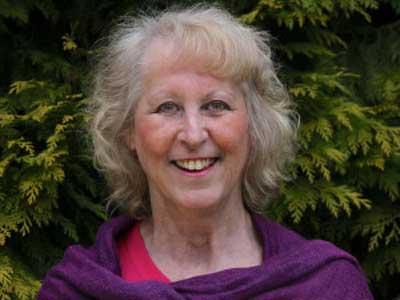
Guest Faculty
During the Training, Fiona will cover Focusing Level 1 and 2. She teaches aspects of the Focusing methodology in the first year as well as Thinking at the Edge as a process to contemplative inquiry in formulating a phenomenological approach to research in the second year.
Fiona Parr is a Focusing-oriented therapist and Certifying Coordinator for The International Focusing Institute (TIFI). She teaches the 5 levels basic course, and professional trainings to Trainer level in the UK and online; and she offers individual Focusing sessions. Fiona has facilitated personal development in others and herself since 1978, and practised Focusing since 1991. Her spiritual life is most important to her, and Focusing supports her spiritual practice.
Bruce Stevenson

Guest Faculty
Bruce Stevenson teaches elements of Internal Family Systems (IFS) and the Inquiry process on the course.
Bruce Stevenson studied Anthropology and has trained in Integrative psychotherapy and Internal Family Systems (IFS) (2006). He has been practicing for over twenty years utilising IFS as well as other effective therapies and techniques. He has also trained with A.H. Almass in the Diamond Approach and was a Buddhist monk in Japan, England and USA for a number of years.
Patricia Meadows

Guest Faculty
Patricia Meadows teaches somatic approaches in being trauma informed as well as working with the subtle body and attachment oriented work on the course. She is a holistic nurse/counselor, trauma therapist, educator, teacher and facilitator of inner work.
Patricia has over 30 years of experience in healthcare and mental health. Currently in her integrative practice of over 15 years, she facilitates a process-oriented approach to healing, transforming and living authentically. Within this integral and holistic context, she also works as a trauma therapist with individuals who have experienced diverse forms of trauma (pre-and perinatal, attachment, relational, developmental, medical/surgical, emotional, physical, sexual, spiritual). Her work is deeply informed by long-term spiritual practice in the Diamond Approach, spiritual inquiry and mediation. She is a teacher in the Diamond Approach. She completed six years of doctoral studies in East/West Psychology at the California Institute of Integral Studies.
Dr Mahesh Deokar
Guest Faculty
Dr Mahesh Deokar will cover aspects of Buddhist Philosophy, Buddhist Psychology and Psychotherapy and is the head of the department of Pali at the University of Pune. He is a well-known scholar and has published a number of papers on Buddhist philosophy and has actively promoted the learning of Buddhist Psychology and Psychotherapy at the University. He takes a module on Buddhist philosophy and highlights the key principles of Buddhist philosophy that find relevance in the course
Amona Buechler

Guest Faculty
Amona teaches awareness through movement on the course and also assists Fiona Parr in the Focusing classes. Amona has been a Certified Feldenkrais Practitioner (Awareness Through Movement) since 1998. She is also a Focusing Trainer, ARUN Conscious Touch practitioner, and trained in Systemic Constellations.
John Prendergast

Guest Faculty
John Prendergast has done pioneering work in bringing a non-dual approach to therapy, and he offers special sessions for our students of the Advanced Training Program in Mindfulness & Presence Oriented Psychotherapy. He is a spiritual teacher, author of ‘The Deep Heart - A Portal to Presence’ , psychotherapist, and retired adjunct professor of psychology. He was a professor of psychology at the California Institute of Integral Studies in San Francisco for twenty-three years where he taught and supervised masters level counseling students. He has had a private psychotherapy practice since 1985. He is the founder and editor-in-chief of Undivided: The Online Journal of Nonduality and Psychology.
Sujatha Nerurkar

Guest Faculty
Sujatha Nerurkar teaches movement through yin yoga on the course as well as pranayam and the subtle body consciousness.
She is a well-established teacher in many different schools of yoga and is passionate about bringing Patanjali’s yoga sutra’s to a larger audience. She is in the process of developing a short term course with Just Being on Mindfulness through movement and yoga, based on the philosophy of the yoga sutras.
The following will be an ongoing process once you submit the application form:
- Submission of Application form
- Short-listed Candidates will be invited for an Interview
- Interview
- Intimation of Final Selection
- Payment of a non-refundable deposit of Rs.25,000 to reserve a seat within 2 weeks of Selection.
- Completion of formalities (Document submission & Full fee payment for Year 1 to confirm seat)
Important Dates:
- Admissions close when seats are full. Limited Seats. Apply Early.
- Interviews will begin in January 2026
- Module 1 begins on August 19th, 2026
Kindly note:
- Admission is on a first-come-first-serve basis.
- The seats are limited due to the nature of the learning involved. Hence request you to apply early
- The 40-day Mindfulness Practice (Integrating Compassion & Wisdom), starting June 27th, is a part of the program. It is included at no additional cost for all enrolled students.
Eligibility Criteria:
- Academic background in Psychology/Social Work/Psychiatry at graduate/post-graduate level
- Practicing Counselors & therapists will be preferred
The course is suitable for :
- Counselors
- Psychotherapists
- Psychologists
- Psychiatrists
- Social Workers
If you do not have the required background and yet feel aligned with the course orientation and are called to do the program, please do fill the form and we can explore the possibility & readiness in a conversation (interview) post that.
If you wish learn more about the Applications of Presence Oriented Psychotherapy,
Watch these videosbelow:
Application in Attachment & Relational Trauma - Sandy Andrade & Arpita Bohra
Application in Clinical Practice - Sandy Andrade & Dr. Rucha Sarwate
Mindfulness and Compassion in Psychotherapy- Sandy Andrade
1. What is Presence oriented psychotherapy?
Presence oriented psychotherapy is a therapeutic approach or modality rooted in the inner journey of the therapist. This two year training/course supports this journey by inviting participants into an inquiry: What is this state of Presence? Participants are encouraged to explore and directly experience the unique qualities of Presence, gradually cultivating an embodied understanding of it.
Rather than focusing solely on techniques or outcomes, this approach emphasises on ‘coming into’ a space of non-conceptual awareness: an awareness that is always available and simply requires recognition.
Mindfulness serves as the core practice through which this Presence is accessed. A central emphasis of the training is on the ‘Self of the therapist’, inviting participants to turn inward, touch into the space of Presence and meet their own selves and inner experiences, as well as what arises in the therapeutic field from this unconditioned space.
Another core aspect of the course is the relational space. Presence oriented psychotherapy brings attention to the space between the therapist and client. Within this relational space, participants are invited to develop and deepen skills such as attunement, resonance and embodied listening. Much of the work in Presence oriented psychotherapy takes place in this field of resonance, cultivating the capacity to sense what is unfolding both within ourselves and in the shared space with the client. This includes becoming aware of one’s own attachment patterns, responses and inner shifts and meeting them from the space of Presence.
2. What does the therapeutic process in Presence oriented psychotherapy look like?
Presence oriented psychotherapy is a very alive and fluid process that involves deeply listening and following a moment to moment unfolding.
The therapist and client work closely in an embodied way, in an atmosphere of safety and trust. This allows for deeper healing forces to emerge in psychotherapeutic contact and facilitates the client’s movement towards a felt sense of wholeness
3. What inspired you to develop this course? Why Presence oriented psychotherapy and why now?
The inspiration for Presence oriented psychotherapy emerged from immersion in both contemporary therapeutic approaches and wisdom traditions. There are various specialisations within the field such as mindfulness, cognitive approach, somatic work, trauma-informed perspectives and energetic or subtle body awareness. Each offers something valuable but they are often taught and practiced separately or in isolation. I found myself drawn to this and wondered if one was interested in this whole realm! What if these different elements could be brought together under one roof? In my own training and practice, I began to ask: What would it mean to bring these threads together in an integrated way? Presence oriented psychotherapy brings together key elements from:
- Mindfulness and Buddhist psychology
- Attachment theory and relational work
- Somatic and subtle body awareness
- Trauma-informed understanding
- Energetic and contemplative traditions
All of these elements come together in an integrative way and offers the possibility of practicing the Presence oriented approach alongside other modalities to deepen existing work or as an approach in and by itself. What makes Presence oriented psychotherapy distinct is its centering of Presence and when we come into contact with that, even briefly, there is often a profound sense of arrival, coming home or a sense that all is well.
4. Who is the course for?
This course is designed for:
- Practicing counselors, psychologists, psychiatrists and social work professionals
- Mental health professionals in training
- Professionals from other related helping fields
5. What are the prerequisites for joining the course?
A background in psychology, social work or a related helping profession is required. Familiarity with contemplative practices can be helpful but is not mandatory.
6. What does a non-dual approach mean in Presence Oriented Psychotherapy and how is it different from other modalities?
Presence oriented psychotherapy intends to hold a non-dual stance by recognising an inherent “wholeness” that underlies all experience. This key principle of the course- ‘wholeness’ points towards a fuller way of relating to psychological experience. A non-dual stance, therefore does not privilege certain experiences over others. It is non-preferential and inclusive, allowing all that arises: pain, joy, confusion, clarity, to be met from a spacious and resting awareness. The emphasis is on being rather than doing.
The therapist learns to recognise a sense of beingness within themselves and to relate to the client from this inner awareness and sense of self. In doing so, both therapist and client are held within a field of presence where healing and insight emerge organically.
Presence oriented psychotherapy thus differs from other modalities in its emphasis on ‘being’ rather than ‘doing’ and on shared presence rather than intervention alone. As a result, shifts may occur not just at the cognitive or emotional level, but also at the level of perception, energy and depth of awareness.
7. What are some of the themes that participants will be introduced to?
Participants are gradually introduced to key themes such as mindfulness, Internal Family Systems, aspects of Buddhist psychology, Focusing, attachment and relational work, trauma resolution and subtle body awareness. These themes are explored in an integrated and experiential manner throughout the course.
8. What can participants expect to experience over the two years of the program?
Over the two years of the Presence oriented psychotherapy course, participants engage in a shared inner journey. While the course is titled ‘Integrating Mindfulness, Compassion, Wisdom: A Non-Dual Approach’, these aspects are not presented merely as ideas but as living experiences that unfold gradually through the course, step by step with each module.
The training is not didactic. Rather, it is an experiential journey, like a gathering where we move together, module by module, exploring and embodying the work in our life.
The course is structured around three key aspects:
- The therapist’s presence
- Presence in the relational field
- Supporting the client in coming into presence
We begin with the foundational work of grounding the therapist in their own embodied presence.
The first module focuses greatly on establishing that base. When we are responding from a place of ‘beingness’, we encounter our mind and heart as a practitioner. We establish that base by learning to return to the base of our body, the ground, especially when the mind is scattered or triggered or are caught in the “doing” energy as practitioners. So we are really setting up that base by working on the mindfulness of the practitioner or the groundedness of the practitioner. This base becomes the most powerful support in the therapeutic alliance as spontaneous shifts often begin to happen when the therapist is simply rooted in Presence.
Each module builds on the previous one. As we move forward, we begin to explore attachment patterns, especially secure attachment, regulation and co-regulation in the relational space. Skills of attunement and resonance become central here, as we deepen our understanding of what’s happening within us and within the client in every moment.
Skills of attunement and resonance become central here, as we deepen our understanding of what’s happening within us and within the client in every moment. We also look at self-compassion and compassionate practices.
The year 1 retreat supports a deepening of the mindfulness practice. And having that practice as not just as something undertaken with a client, but as something you have for yourself as a personal way of being, living and knowing. This integration of mindfulness into daily life becomes foundational to the therapist’s presence. The year 2 retreat, organised later in the program builds on this foundation. It brings participants into deeper levels of embodiment and attunement, particularly through attention to the subtle body.
The course introduces and equips participants to a range of tools that kind of stay in the background that can be drawn upon depending on the client’s unique needs in each moment or session. The therapist then operates not from the tools or techniques, but operates from relating to the client in a moment to moment way from the space of presence.
Subsequent modules bring further layers taking from Internal Family Systems and working with protective parts and how to meet them for example. In the second year, we begin exploring more nuanced territories including trauma imprints, somatic awareness, the role of physiology in healing and the integration of subtle body awareness. The final module is a space of synthesis and settling, bringing together all the threads and rest in themselves as we meet the client in the therapeutic space.
Throughout the training, perceptual skills are continuously refined which allow the therapist to attune more finely to what is arising within and between. The therapist’s presence becomes a steady, resonant field within which the client can also come into contact with their own presence. This is the heart of presence-oriented work.
9. What is the format, duration and requirements for course completion?
The Presence Oriented Psychotherapy course is spread over two years, allowing for a gradual integration of both conceptual and experiential learning. A key aspect of the course is creating a holding environment through peer relationships, mentorship and therapeutic support—to meet whatever arises during this transformative journey.
The format includes:
- Modules: Each year consists of a few in-person and online training modules typically five days long, with approximately two months between each module. This spacing provides time for participants to absorb and apply the learnings in their work and life in general
- Retreat: One seven-day residential retreat in each year
- Assignments: Between modules, participants engage with a variety of reflective assignments. These include:
- Application of presence-based approaches in peer exchanges and client sessions
- Essays focused on personal explorations of the material, rather than academic analysis
In terms of supervision and support:
- Group supervisions are offered throughout the course.
- Individual supervision becomes more prominent in the second year.
- Participants are also encouraged to engage in their own personal therapy,
In the later part of the course, students also undertake a small research project. This is a reflective inquiry into how they might take presence-oriented work into the world, exploring areas of relevance through presence orientation.
Completion of the course requires full participation in the modules, engagement with assignments, supervision and the final research project. Each component shared above supports and deepens the therapist’s learning and presence.
10. For someone trained in another kind of therapeutic modality, what do you think this course adds or transforms for them?
The Presence oriented approach enhances and deepens existing practice because of the presence-based or mindfulness orientation that can be brought into any other modality. It doesn’t replace what you already know, instead, it shifts or deepens how you engage with it. It deepens how you perceive the other and how you use any particular technique.
The approach naturally integrates and can provide support to a range of other modalities. The psychodynamic lens for instance is present when we explore attachment, early imprints and relational dynamics. The cognitive aspects come in as we attend to beliefs underlying sensations and emotions. Even expressive arts too can blend with ease with the presence oriented approach.
11. What kind of inner readiness or curiosity is needed to bring to this course?
Just the sense of curiosity. A willingness to explore. That’s really all. You don’t need to be someone or something different. You can just come as you are and be willing to encounter yourself as you are. That is the work and that is where the work begins.